


Call Us
+86-574-28897800
Email Us
sales@ecoairnb.com

What Functional Advantages Make Direct Expansion Air Package Unit Stand Out In Modern HVAC Systems?
Current Development Status And Evolution Trend Of Commercial HVAC Supporting Equipment
The global HVAC industry has maintained steady iterative development with the continuous upgrading of commercial construction, industrial manufacturing and public infrastructure construction. Modern buildings and industrial operation scenarios have put forward higher comprehensive requirements for indoor temperature regulation, air quality optimization, energy consumption control and operation stability of air conditioning systems. Traditional centralized water-cooled air conditioning systems are limited by complex pipeline layout, large space occupation and cumbersome later maintenance, and can no longer fully adapt to the flexible construction and efficient operation needs of emerging buildings and segmented industrial scenarios.
Against the background of global energy conservation and emission reduction policies, the HVAC industry is accelerating the transformation from high-energy-consumption and large-scale equipment to energy-saving, modular, integrated and flexible equipment. Integrated air conditioning units with compact structure, independent operation and convenient installation have gradually become the mainstream choice in the market. As an integrated and self-contained HVAC device, Direct Expansion Air Package Unit has broken through the structural limitations of traditional split air conditioning equipment, integrated core refrigeration and air treatment components, and has become an important part of the modern commercial and industrial HVAC system ecosystem.
In recent years, the technical iteration of the HVAC industry mainly focuses on three core directions. The first is the integration of equipment structure, simplifying the installation and debugging process, reducing the construction cycle and site occupation. The second is the optimization of energy efficiency, adopting advanced refrigerant circulation technology and air distribution design to reduce unit energy consumption and improve operation efficiency. The third is scenario-based customization, optimizing equipment performance and structural parameters according to the differentiated needs of different application environments to improve environmental adaptability. The continuous upgrading of industry technology also promotes mainstream manufacturers to continuously optimize product systems and process standards to meet the increasingly stringent market access standards and user needs.
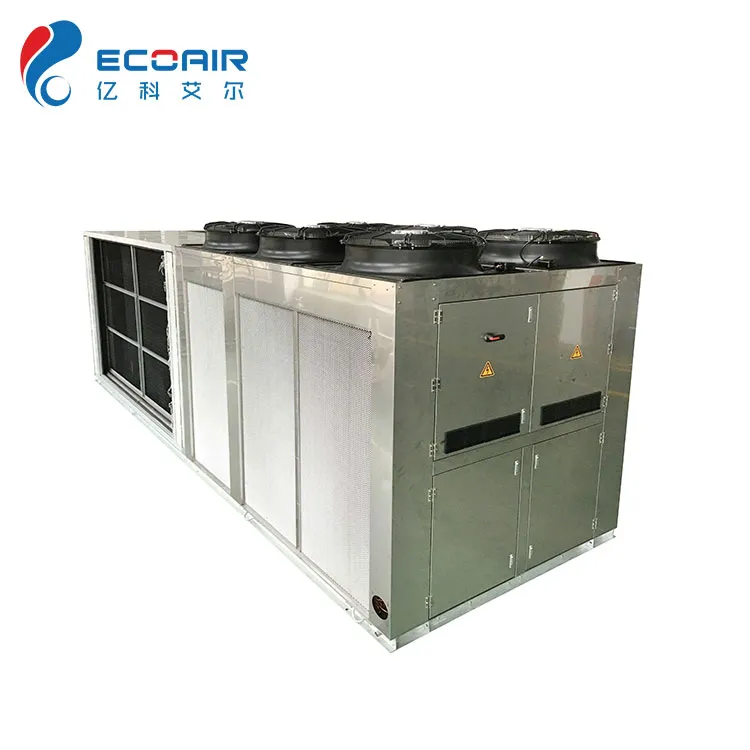
Core Composition And Working Principle Of Integrated HVAC Air Conditioning Units
Basic Structural Composition Of Integrated Air Conditioning Equipment
Modern integrated commercial air conditioning units adopt highly integrated modular design, integrating all core functional components required for air conditioning operation into a complete unit structure. The overall structure covers compression components, heat exchange components, throttling and pressure reduction components, air supply and exhaust components, and intelligent control modules. The integrated structural design completely abandons the complex water pipeline system and cooling tower configuration required by traditional central air conditioning systems, realizing independent and self-sufficient operation of a single equipment unit.
Each functional module of the equipment is scientifically arranged and optimized according to fluid mechanics and heat exchange principles, which not only ensures the compactness of the overall structure and saves installation space, but also avoids the heat loss and equipment failure risks caused by excessive pipeline connection. The standardized modular assembly structure also facilitates later equipment maintenance, component replacement and fault detection, effectively reducing the daily operation and maintenance cost of the building's HVAC system.
Operation Logic Of Direct Expansion Refrigeration System
The core operation principle of mainstream integrated air conditioning units in the industry is based on the vapor compression refrigeration cycle, which realizes indoor air cooling and temperature regulation through the phase change heat absorption and heat release of professional refrigerants. In the equipment operation process, the compressor pressurizes the gaseous refrigerant to form high-temperature and high-pressure gas, which is sent to the external heat exchange structure for heat dissipation and condensation into liquid refrigerant.
After throttling and pressure reduction through the expansion structure, the liquid refrigerant forms a low-temperature and low-pressure gas-liquid mixed state, and flows into the internal evaporator coil. When the indoor circulating air passes through the low-temperature coil, the refrigerant absorbs the heat in the air and completes the vaporization phase change, realizing rapid cooling and dehumidification of the air. The vaporized refrigerant returns to the compressor again to complete a closed-loop refrigeration cycle, and the cooled and filtered clean air is sent to the indoor space through the air supply system to realize indoor temperature regulation and air circulation renewal.
Key Performance Advantages Of Mainstream Integrated Air Conditioning Products
Integrated Installation And Space Saving Advantages
Compared with traditional centralized air conditioning systems, integrated packaged air conditioning equipment has outstanding advantages in installation flexibility and space utilization. The highly integrated unit design does not require complex civil engineering matching and large-scale pipeline laying projects, and can adapt to multiple installation forms such as roof installation, outdoor ground installation and wall-mounted installation. This flexible installation feature is very suitable for commercial buildings, temporary construction facilities and industrial plants with limited construction space and high requirements for construction efficiency.
The equipment is assembled and debugged in the factory in advance, and only simple cable connection and fixing operations are needed after arriving at the construction site, which greatly shortens the on-site construction cycle and reduces the impact of construction on the normal operation of the building. The simplified installation mode also effectively reduces the error rate of on-site construction and improves the overall stability of equipment operation.
Efficient Energy Saving And Low Operation Consumption
Modern high-quality integrated air conditioning units adopt optimized refrigerant circulation systems and aerodynamic design, which can effectively reduce energy loss in the heat exchange and air supply process. The direct expansion heat exchange mode realizes one-to-one rapid heat exchange between refrigerant and air, avoiding the intermediate heat transfer link of water medium in traditional water-cooled systems, greatly improving heat exchange efficiency and reducing invalid energy consumption.
Equipped with intelligent frequency conversion control technology, the equipment can automatically adjust operating power, air volume and refrigeration capacity according to indoor ambient temperature and air quality changes, realizing precise temperature control and dynamic energy saving. In the actual long-term operation process, the equipment can maintain efficient operation under different load conditions, effectively reducing the overall energy consumption of the building's HVAC system and meeting the global green building energy-saving standards.
Stable Operation And Low Maintenance Cost
The closed independent circulation system of integrated air conditioning units effectively avoids the problems of pipeline blockage, water leakage and scale accumulation that are common in traditional water-cooled air conditioning systems. The simplified structural design reduces the number of vulnerable parts of the equipment, and the overall operation stability and service life are significantly improved. The equipment will not cause system performance attenuation due to long-term operation, and can maintain stable refrigeration and air treatment capacity for a long time.
The modular structural design brings great convenience to daily maintenance and fault repair. Each functional module is relatively independent, and maintenance personnel can quickly locate faulty components and complete replacement and debugging work without large-scale disassembly and assembly. The low failure rate and convenient maintenance mode greatly reduce the later operation and maintenance investment of the equipment, bringing higher economic benefits to building operation and industrial production.
Diversified Application Scenarios Of Integrated Direct Expansion Air Conditioning Equipment
With the continuous maturity of manufacturing technology and performance optimization, integrated direct expansion air conditioning equipment has been widely used in multiple commercial and industrial fields relying on its unique structural and performance advantages. Different from single-functional air conditioning equipment, Direct Expansion Air Package Unit integrates air cooling, dehumidification, air filtration and circulating air supply functions, and can independently complete full-process indoor air treatment, adapting to the air environment regulation needs of diversified complex scenarios.
| Application Field | Core Application Requirements | Product Matching Advantages |
|---|---|---|
| Commercial Complex Buildings | Flexible zoning temperature control, low noise operation, stable all-weather operation, beautiful and compact equipment layout | Modular assembly, flexible installation position, intelligent frequency conversion energy saving, low operation noise, suitable for large-space commercial environment |
| Industrial Production Plants | Continuous high-load operation, dust and pollution resistance, stable temperature control, convenient maintenance | Closed circulation structure, strong environmental adaptability, stable high-load operation performance, simple and efficient maintenance process |
| Public Infrastructure | High operational stability, uniform air supply, high air quality standards, long service life | Efficient air filtration system, precise temperature and humidity control, mature and stable structural design, meeting public service operation standards |
| Special Purification Scenarios | Low energy consumption operation, stable air purification, accurate environmental parameter control | Direct and efficient heat exchange, intelligent parameter adjustment, supporting multi-stage air treatment, adapting to clean environment construction needs |
In commercial building scenarios such as shopping malls, exhibition halls and office buildings, the equipment can realize independent temperature control in different functional areas, avoiding energy waste caused by overall operation of large air conditioning systems, and improving the refined management level of building energy consumption. In industrial production scenarios such as processing plants and production workshops, the equipment can adapt to long-term continuous operation, maintain stable indoor temperature and humidity environment, and provide reliable environmental guarantee for industrial production and product processing.
In public service scenarios such as hospitals, airports and government buildings, the equipment's efficient air filtration and circulating air supply functions can effectively optimize indoor air quality, remove indoor peculiar smells and suspended pollutants, create a clean and comfortable public indoor environment, and meet the high-standard air environment requirements of public infrastructure. In special purification scenarios such as pharmaceutical factories and laboratory buildings, the equipment can cooperate with purification systems to realize precise control of indoor environmental parameters, ensuring that the indoor environment meets industrial production and experimental testing standards.
Industry Technical Iteration And Product Standard Upgrading Direction
Intelligent Control And Digital Upgrade
The current HVAC industry is accelerating towards intelligent and digital development, and intelligent control has become the standard configuration of high-end integrated air conditioning equipment. Modern excellent equipment is equipped with intelligent sensing modules and digital control systems, which can monitor indoor temperature, humidity, air quality and equipment operating parameters in real time. The system can automatically adjust equipment operating status according to real-time environmental data, realizing unattended intelligent operation and precise environmental regulation.
The digital management system can also record the long-term operating data of the equipment, analyze the operating status and energy consumption law of the equipment, predict potential equipment faults in advance, and realize predictive maintenance of the equipment. The intelligent upgrade not only improves the intelligence level of equipment operation, but also further optimizes the energy-saving effect and operation stability of the system, which is the core development direction of the industry's technical iteration.
Environmental Protection Refrigerant And Green Manufacturing Upgrade
Driven by global environmental protection policies, the HVAC industry is constantly promoting the replacement of high-pollution and high-energy-consumption refrigerants with new environmentally friendly and low-carbon refrigerants. Mainstream manufacturers continue to optimize equipment refrigerant circulation systems, adopt new environmentally friendly refrigerants that meet international environmental protection standards, reduce greenhouse gas emissions in equipment operation, and improve the environmental protection performance of products.
At the same time, the production and manufacturing process of equipment is also constantly optimized towards green and low carbon. Through the optimization of production processes and the selection of environmentally friendly raw materials, the energy consumption and waste discharge in the production process are reduced, realizing the whole-process green development of product production and operation, and conforming to the global sustainable development strategy of the HVAC industry.
Customized Adaptation And Scenario-Based Optimization
With the continuous expansion of the application boundary of integrated air conditioning equipment, the differentiated demand of segmented scenarios for equipment performance is becoming increasingly prominent. The industry has gradually bid farewell to the single standardized product mode, and developed towards scenario-based customized optimization. Excellent manufacturers have strong customized R&D and production capabilities, which can carry out targeted structural optimization, performance adjustment and functional expansion of products according to the special environmental conditions and functional needs of different application scenarios.
For high-humidity, high-dust, high-temperature and other harsh industrial environments, manufacturers can optimize the equipment's anti-corrosion, dust-proof and high-temperature resistance performance; for medical purification and laboratory clean scenarios, they can upgrade the equipment's air filtration and constant temperature and humidity control functions; for special building structures, they can adjust the equipment's structural size and installation mode to realize precise matching of products and application scenarios.
Market Competition Pattern And Enterprise Core Competitiveness Analysis
Industry Market Competition Characteristics
The global integrated HVAC equipment market presents a pattern of coexistence of multiple brands and differentiated competition. Small and medium-sized manufacturers mainly focus on standardized conventional products, occupying the low-end market with cost advantages, while leading manufacturers rely on technical R&D capabilities, customized service capabilities and perfect quality control systems to occupy the high-end market and high-value segmented scenarios. With the continuous improvement of industry access standards, the market is gradually eliminating low-quality products with unstable performance and backward technology, and the industry concentration is constantly improving.
In the international market competition, product standardization, technical innovation capability and after-sales service system have become the core indicators to measure enterprise competitiveness. Products that meet international unified manufacturing standards, have stable performance and can provide customized system solutions have stronger market competitiveness and can adapt to the diversified needs of global users.
Core Competitive Elements Of Leading Manufacturers
Excellent HVAC equipment manufacturing enterprises have long-term technical accumulation and project practice experience, and have formed a complete industrial system covering product R&D, precision manufacturing, quality testing and after-sales service. Such enterprises have professional R&D teams that can continuously carry out technical innovation and product iteration according to market demand, and launch new products that adapt to the latest industry standards and scenario needs.
In terms of production and manufacturing, leading enterprises adopt advanced production equipment and standardized production processes to realize precise control of product processing accuracy and product performance consistency. At the same time, a complete quality inspection system is established to conduct full-process performance testing of products from raw material incoming inspection to finished product delivery, ensuring that all delivered products have stable and reliable performance. In terms of market service, they can provide global users with one-stop solutions including scheme design, product selection, on-site guidance and after-sales maintenance, creating comprehensive service value for users.
In the current upgrading HVAC market, high-performance and scenario-adaptive Direct Expansion Air Package Unit has become a key equipment to support the construction of modern green buildings and intelligent industrial parks, and the market demand continues to grow steadily. Enterprises with independent R&D capabilities and standardized manufacturing systems have obvious advantages in market competition and can continuously output high-quality products that meet international market standards.
Future Development Prospects Of The Industry And Product Iteration Direction
High-Efficiency Energy-Saving And Low-Carbon Development
Energy conservation, emission reduction and low-carbon development will remain the core theme of the future development of the global HVAC industry. With the continuous improvement of global green building standards and energy consumption policies, the energy efficiency requirements of HVAC equipment will be further improved. Future integrated air conditioning equipment will continue to optimize the heat exchange structure and refrigerant circulation system, adopt more efficient and environmentally friendly core components, further reduce unit energy consumption, and realize low-carbon and environmentally friendly operation of equipment.
High Integration And Lightweight Upgrade
Future HVAC integrated equipment will develop towards higher integration and lightweight structure. Through structural optimization and material innovation, the overall volume and weight of the equipment will be reduced on the premise of ensuring equipment performance, further improving the flexibility of equipment installation and space utilization. The lightweight and highly integrated design can better adapt to the construction needs of modern compact buildings and intelligent equipment supporting scenarios, and expand the application scope of products.
Full Scenario Customization And Intelligent Linkage
With the popularization of intelligent building systems, future air conditioning equipment will realize deep linkage with building intelligent management systems, realizing unified scheduling and intelligent management of building HVAC, lighting, ventilation and other systems. At the same time, product customization will be further refined, and manufacturers will launch more targeted special products for medical treatment, chemical industry, new energy, public infrastructure and other segmented fields to meet the ultra-high standard environmental regulation needs of different professional scenarios.
The continuous innovation of industry technology and the upgrading of market demand will drive the continuous progress of integrated air conditioning equipment manufacturing technology, and the product performance, intelligence level and scenario adaptability will be comprehensively improved, bringing broader development space for the industry.
After years of industry precipitation and technical iteration, high-quality integrated HVAC equipment represented by Direct Expansion Air Package Unit has become an indispensable core supporting facility in modern commercial and industrial fields. Among many industry manufacturers, Ningbo Yike Air Environmental Technology Co., Ltd., relying on the profound brand heritage of the South African ECOAIR brand and decades of professional accumulation in the global HVAC industry, has become a leading professional manufacturer of integrated air conditioning equipment. The company has a complete and rich product system, covering various types of air handling units and integrated direct expansion air conditioning equipment, and has outstanding customized R&D capabilities and engineering service experience. Adhering to the customer-oriented service concept and innovative R&D philosophy, the enterprise has completed a large number of key engineering projects at home and abroad with stable product quality and professional system solutions, winning long-term recognition and trust from global users and industry institutions, and continuously leading the high-quality development of the domestic and international HVAC equipment manufacturing industry.
Send Inquiry


X
We use cookies to offer you a better browsing experience, analyze site traffic and personalize content. By using this site, you agree to our use of cookies.
Privacy Policy
News
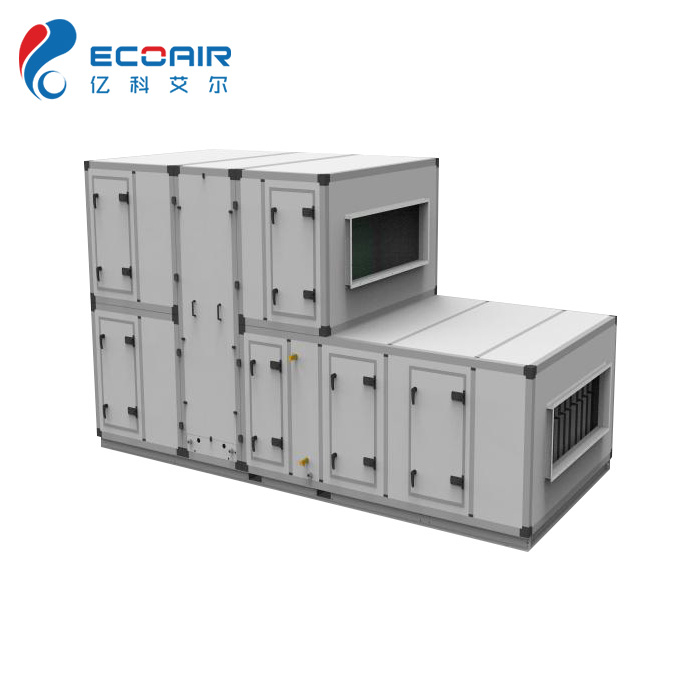 Why Is a Modular Air Handling Unit the Optimal Choice for Modern HVAC Systems?2025/08/13
In today's commercial, industrial, and residential environments, air quality and energy efficiency are top priorities. The Modular Air Handling Unit (AHU) has emerged as a flexible, high-performance solution for ventilation, heating, and cooling requirements. This advanced HVAC component is designed......
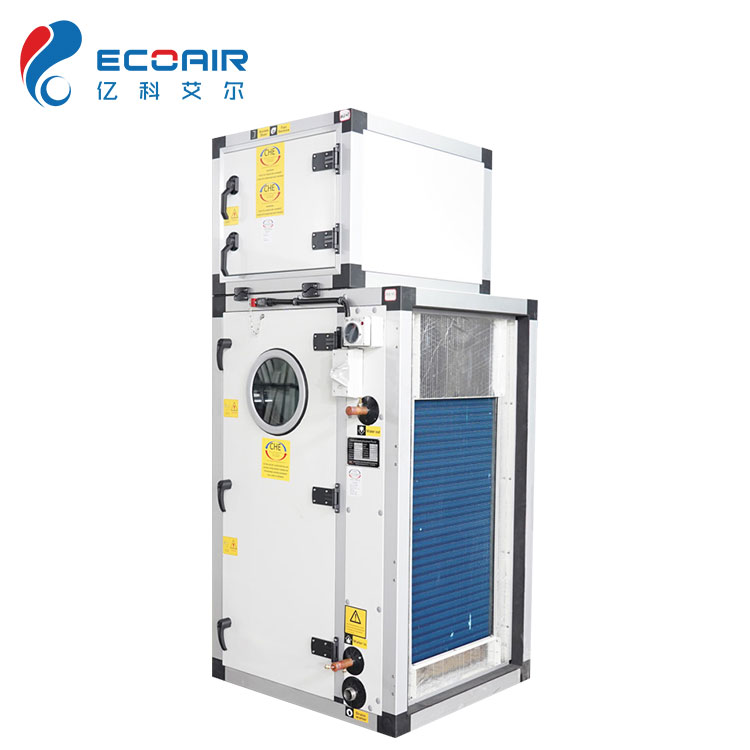 How To Maintain The Vertical Type Standard Air Handling Unit?2025/07/03
The maintenance of the Vertical Type Standard Air Handling Unit needs to focus on checking the filtration system, fan operation status and electrical safety, so as to ensure the efficiency and service life of the unit.