


Call Us
+86-574-28897800
Email Us
sales@ecoairnb.com

What Is an Air Cooled Chiller System and How Does It Transform Modern Industrial Cooling Efficiency?
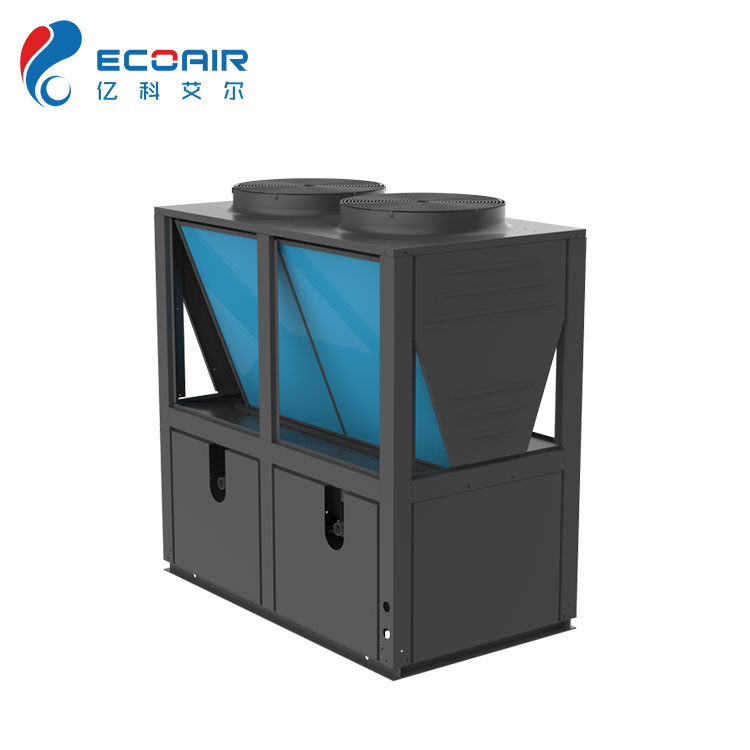
In today’s rapidly evolving industrial landscape, stable and efficient temperature control is no longer optional but a fundamental requirement for production quality, equipment longevity, and energy optimization. As factories, data centers, and processing plants continue to increase in scale and complexity, the demand for reliable cooling infrastructure has grown significantly. Among the most widely adopted solutions in this field, the Air Cooled Chiller stands out as a practical and cost-effective system that supports continuous industrial operations with minimal water dependency and simplified installation requirements.
Article Summary
This article provides a deep engineering-level exploration of modern industrial cooling systems, focusing on structure, thermodynamic principles, system optimization, application scenarios, and selection methodology. It explains how the Air Cooled Chiller contributes to efficient heat management across multiple industries while reducing operational complexity and long-term maintenance costs.
Table of Contents
- Industrial Cooling Fundamentals
- System Definition and Structure
- Thermodynamic Working Principle
- Energy Efficiency Optimization
- Industrial Applications
- System Design Considerations
- Maintenance Strategy
- Frequently Asked Questions
Industrial Cooling Fundamentals
Industrial heat generation is an unavoidable byproduct of modern manufacturing processes. Without proper heat dissipation systems, machinery efficiency declines, product consistency suffers, and operational risks increase significantly. Cooling technologies are therefore designed not only to remove excess heat but also to stabilize process conditions in real time. In this context, the Air Cooled Chiller plays a critical role by providing continuous and controlled cooling performance without requiring large-scale water infrastructure.
Unlike traditional cooling approaches that depend heavily on external water sources, air-based systems rely on ambient air for heat rejection, making them particularly suitable for regions with water limitations or cost-sensitive installations.
System Definition and Structure
A cooling system such as the Air Cooled Chiller is a closed-loop refrigeration device designed to transfer heat from process fluids into the surrounding environment. Its main components include a compressor, evaporator, condenser, expansion valve, and fan assembly. Each component plays a specific role in maintaining continuous thermal equilibrium within the system.
- Compressor: Increases refrigerant pressure and temperature
- Evaporator: Absorbs heat from process water
- Condenser: Releases heat into ambient air
- Expansion Valve: Controls refrigerant flow and pressure drop
Thermodynamic Working Principle
The operational cycle begins when warm process water enters the evaporator section, where heat exchange occurs between the refrigerant and the water stream. The refrigerant absorbs thermal energy and transitions into a gaseous state. It is then compressed, increasing both pressure and temperature before entering the condenser unit.
At the condenser stage, high-speed airflow generated by axial fans dissipates heat into the surrounding environment. The refrigerant cools down and condenses into a liquid state before passing through the expansion valve, where pressure is reduced and the cycle restarts. This continuous loop ensures stable cooling performance across varying industrial loads.
Energy Efficiency Optimization
Modern cooling systems are designed with energy optimization as a core engineering objective. One of the key advantages of the Air Cooled Chiller is its ability to integrate advanced control technologies that adjust performance based on real-time demand.
Variable Load Operation
Instead of operating at full capacity continuously, the system dynamically adjusts compressor speed and fan operation depending on thermal load conditions. This significantly reduces unnecessary energy consumption during partial-load periods.
Heat Exchange Improvement
Enhanced condenser coil designs improve airflow distribution and increase surface contact area, allowing more efficient heat dissipation without additional power input.
Smart Control Systems
Digital controllers monitor temperature fluctuations and system pressure in real time, optimizing operational efficiency and preventing energy waste.
Industrial Applications
The Air Cooled Chiller is widely implemented across industries requiring stable and continuous cooling performance. Its versatility allows it to support both precision manufacturing and large-scale industrial processes.
- Plastic injection molding and extrusion systems
- Food processing and cold chain storage
- Pharmaceutical production environments
- Data center thermal management systems
- Industrial HVAC and commercial buildings
System Design Considerations
When designing industrial cooling infrastructure, engineers must evaluate multiple technical parameters to ensure optimal performance and long-term reliability. Proper system sizing and configuration directly impact efficiency and operational stability.
- Cooling capacity matching with process load
- Ambient temperature influence on performance
- Airflow distribution and installation spacing
- Noise control and vibration management
Manufacturing and engineering support provided by Ningbo Yike Air Environmental Technology Co., Ltd. ensures that system configurations are tailored to meet specific industrial requirements and environmental conditions.
Maintenance Strategy
Proper maintenance is essential to ensure long-term efficiency and operational stability. Regular servicing reduces the risk of system failure and extends equipment lifespan significantly.
- Periodic condenser coil cleaning
- Refrigerant pressure inspection
- Fan motor performance monitoring
- Electrical system safety checks
Preventive maintenance strategies are especially important in continuous operation environments where downtime can lead to significant production losses.
Frequently Asked Questions
What industries commonly use this system?
It is widely used in manufacturing, HVAC systems, pharmaceuticals, plastics processing, and data center cooling applications.
Is it suitable for hot climates?
Yes, although efficiency may decrease in extremely high ambient temperatures, system design optimization can mitigate performance loss.
What is the main advantage?
The primary advantage is eliminating the need for water cooling infrastructure, reducing installation complexity and operational costs.
Conclusion
As industrial demand for energy-efficient and reliable thermal management continues to grow, cooling technologies must evolve to meet higher performance expectations. The Air Cooled Chiller remains a widely adopted solution due to its balance of efficiency, simplicity, and operational flexibility across diverse industries.
For customized engineering solutions and professional system design support, Ningbo Yike Air Environmental Technology Co., Ltd. provides advanced industrial cooling technologies tailored to global manufacturing standards.
contact us today to receive expert consultation and optimized cooling system solutions for your industrial project needs.
Send Inquiry


X
We use cookies to offer you a better browsing experience, analyze site traffic and personalize content. By using this site, you agree to our use of cookies.
Privacy Policy
News
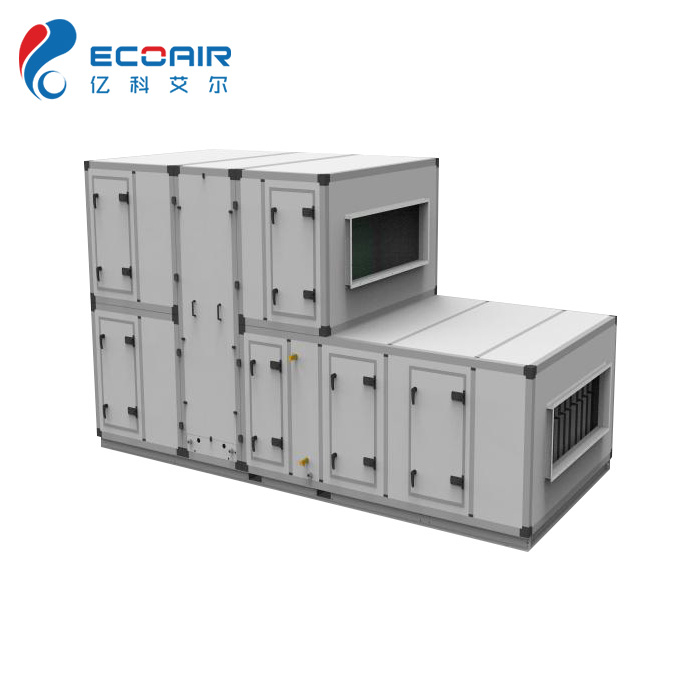 Why Is a Modular Air Handling Unit the Optimal Choice for Modern HVAC Systems?2025/08/13
In today's commercial, industrial, and residential environments, air quality and energy efficiency are top priorities. The Modular Air Handling Unit (AHU) has emerged as a flexible, high-performance solution for ventilation, heating, and cooling requirements. This advanced HVAC component is designed......
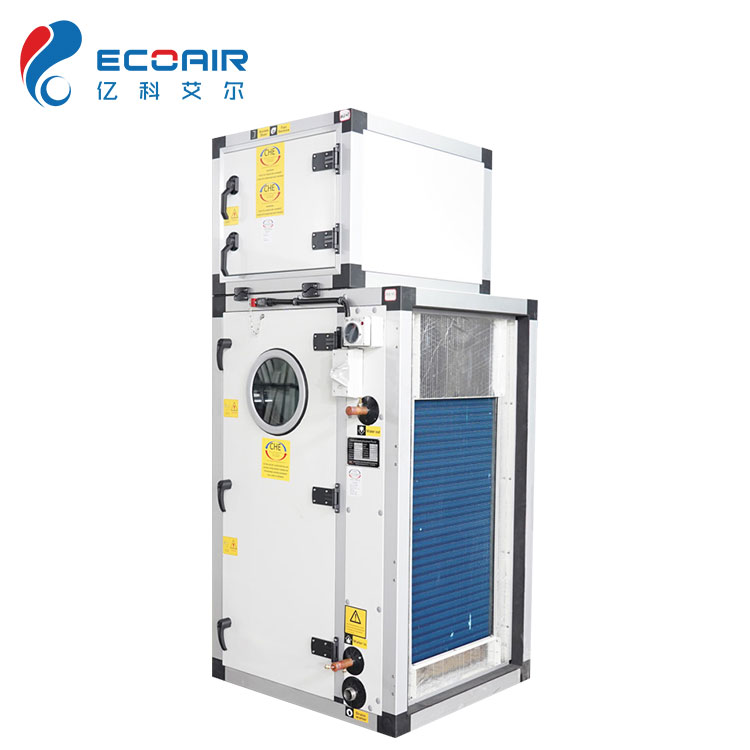 How To Maintain The Vertical Type Standard Air Handling Unit?2025/07/03
The maintenance of the Vertical Type Standard Air Handling Unit needs to focus on checking the filtration system, fan operation status and electrical safety, so as to ensure the efficiency and service life of the unit.